
Blog
Rekindling hope as an act of defiance
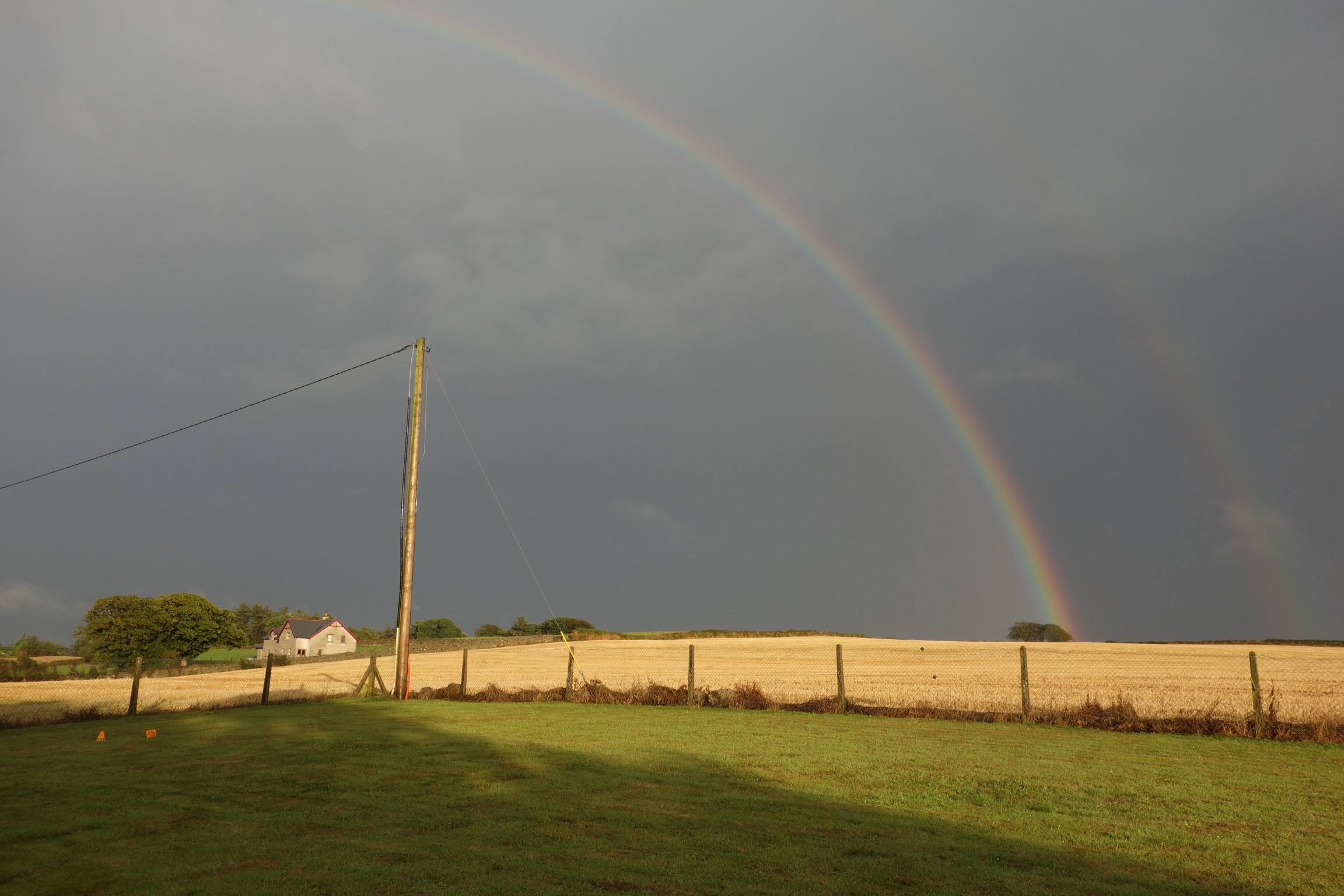
Double rainbow (taken in West Cork, Ireland in 2014)
It was a strange disorientating time between the surprise exit polls on June 8th and the confirmation of the UK general election result on the morning of June 9th. As Big Ben boomed and Dimbleby started to announce I managed to catch that one breath of not-knowing and savour it. And as I relished it, I braced myself for the usual disappointment.Time slowed down – and then came the exit poll….to which I reacted simply by shouting “Ho ho ho” and running to the kitchen – a strange Santa crossed with Dennis the menace. Surely they were wrong?
We had to wait and see, and as the discussions raged, over the next few hours a strange thing started to stir….and I was not familiar how to deal with it. There was a possibility things would go how I wanted them to…..Hello stranger, it’s been a while. George Monbiot was feeling it too – at about 11pm he tweeted as follows:
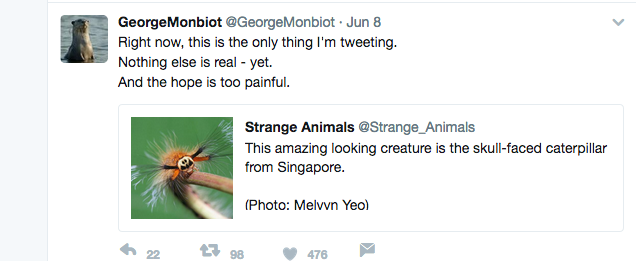
Hope was feeling unfamiliar and yes, painful.
I switched off the radio at 12 and fell asleep instantly.
In her book “Hope in the dark” the writer and activist Rebecca Solnit tells us that ‘hope is an act of defiance’. Despair, she says, is often simply a reflex and a habit. She warns that the liberal left doesn’t sometimes know how to hope – or to consider ‘winning’ – finding it far easier to keep clinging to the ‘teddybear of despair’.
Philosopher and environmentalist John Foster who writes about our capacity for denial of Climate change in After Sustainability enjoins easy despair with its mirror image twin false hope. His critique of the sustainable development movement in the 90s was their all too easy surrender to an ungrounded optimism that by setting targets and embracing technology we’d solve climate change. And as the emissions continued to climb valuable time was lost. The post-millennium decade seems a beacon of hope by comparison with what came afterwards.
With the horrors of Brexit on 23rd of June 2016 and the final disgrace of the Trump election in November I realise now I had gradually settled into the comfortable arms of easy despair. It had become a habit, a reflex – more psychological than idealogical – at one with my slightly dark disposition. I switched off all news, started watching box-sets and decided to focus on the day-to-day challenges of living my life, being a good parent and doing a good job.
My mother rang from Ireland to commiserate after Brexit, and then again when Trump pulled the US out of the Paris Climate agreement: “All your hard work Margaret on climate change – you must be devastated” she said. Actually I wasn’t devastated. I was numb. I’d been fairly resigned to it when the US pulled out of Paris and comforted by the fact that I’d predicted it. I was not investing any more in these news items. It was a bit like not following your team at football I suppose. Loving them perhaps a little too much.
But then election day came – 8th June 2017. I was reading Rebecca Solnit’s book and she was opening up a space for a kind of hope I could relate to. A hope past despair. She quoted Virgina Woolf as saying
“The future is dark, which is on the whole, the best thing the future can be”
Yes. Dark is ok. Exciting even.
And so it was that on that day that I made my way up to the polling station feeling hopeful and happy. Even though I knew I’d lose locally and most likely nationally. In our constituency the Tory MP Jacob Rees Mogg has a huge majority. But it was a particularly proud day because my daughter Isabel was at my side. Just a week beforehand she’d turned 18 – this was her first vote and she was supporting Jeremy Corbyn. She was fresh and lively in that support and not shy in pointing out to me any sluggishness in my own views. We tied the dog up outside and strode confidently past the kindly Tory geezer on the door who asked for our numbers.
So it was that, although destined for defeat, for the first time in a while I felt hopeful. It was a happy day and outside I snapped this:
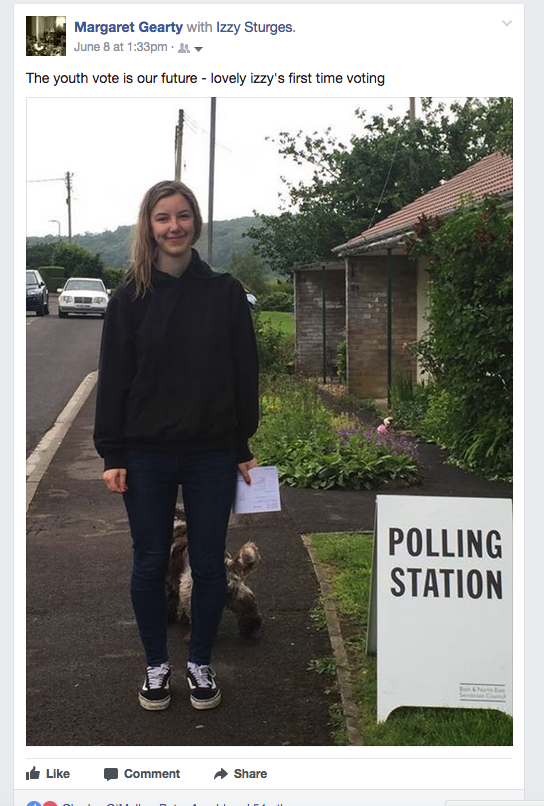
Hope as an act of defiance.
A choice.
A mood.
And then with the election result – that hope was met with possibility.
Solnit talks about the “activism of hope” – how a third-wave revolution in our time is not going to be based on ideology but will be anti-doctrinal. It’s easy to miss it – or to think it’s not there. But engaging with the politics of hope is something we all can do. And I’m seeking to connect back to that “politics of hope” and make it visible as a story we all can tell