
Blog
I do not acquiesce
What is the poetic move when you feel powerless and caught inside the momentum of something you don’t quite understand? In this blog, I head out for a run and unpack my strong feelings regarding the collapse of the UK-EU Brexit talks. As I panic, an insight from a reader gives me a place to head for and four simple words to say: I do not acquiesce.
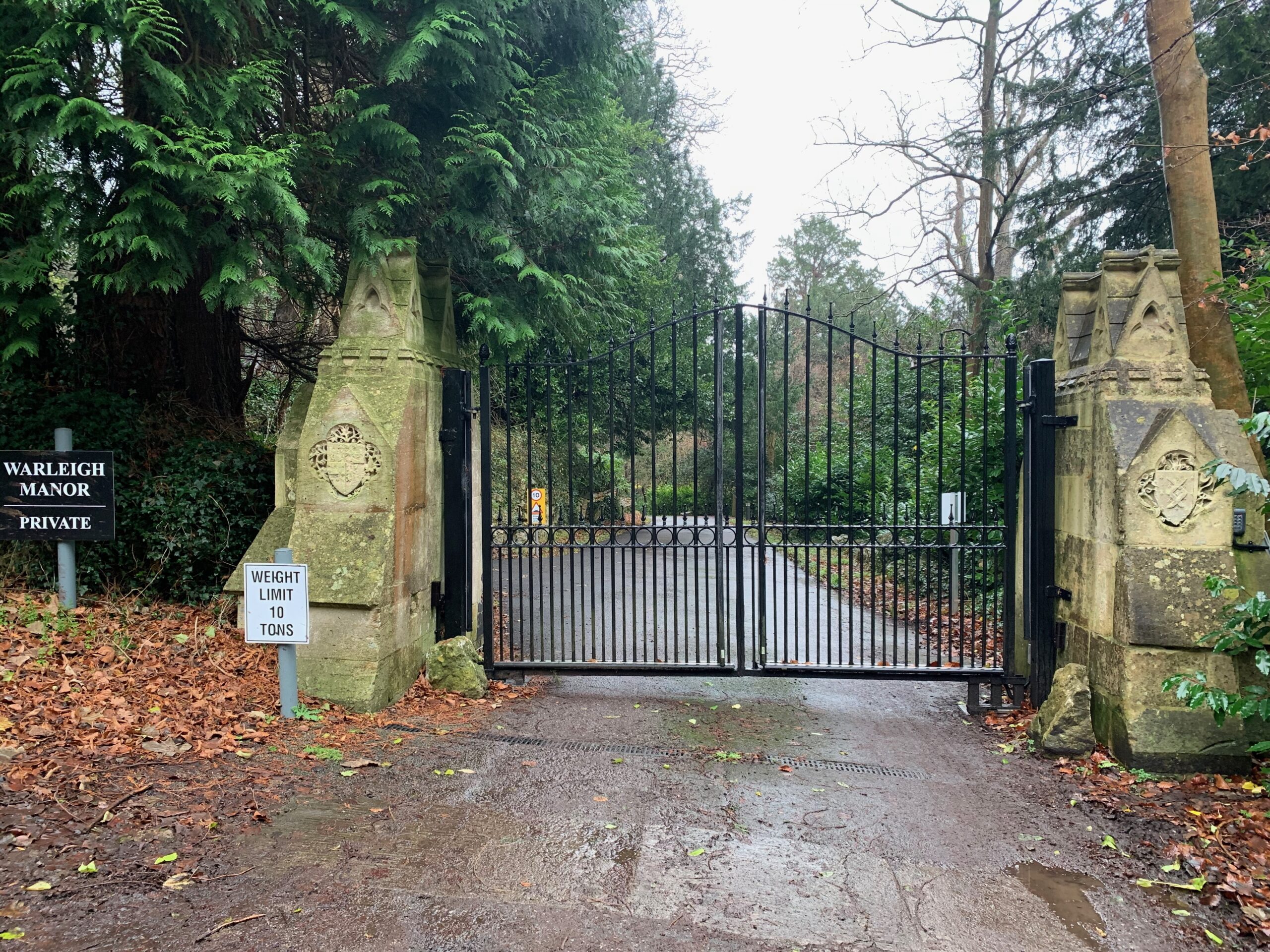
Warleigh manor gates are always closed
Saturday – Low fog and black sheep
Today dawned clear and fresh so I decided to run out along the small lane to Warleigh Manor near where I live in the UK. There was a low fog on the fields that ran down to the Avon. A huddle of black sheep skittered as I puffed by. Overhead a crow glided, wingtips spread. “I love this”, I thought, and then: “I love this country”. I cried quietly as I ran – my Brexit tears – part wind, love and anger. Perhaps I was crying my way to the future as I’ve written about in an earlier blog and I idly tried to imagine what structure Brexit tears would have if put under Rose-Lynn Fisher’s microscope.
Brexit talks
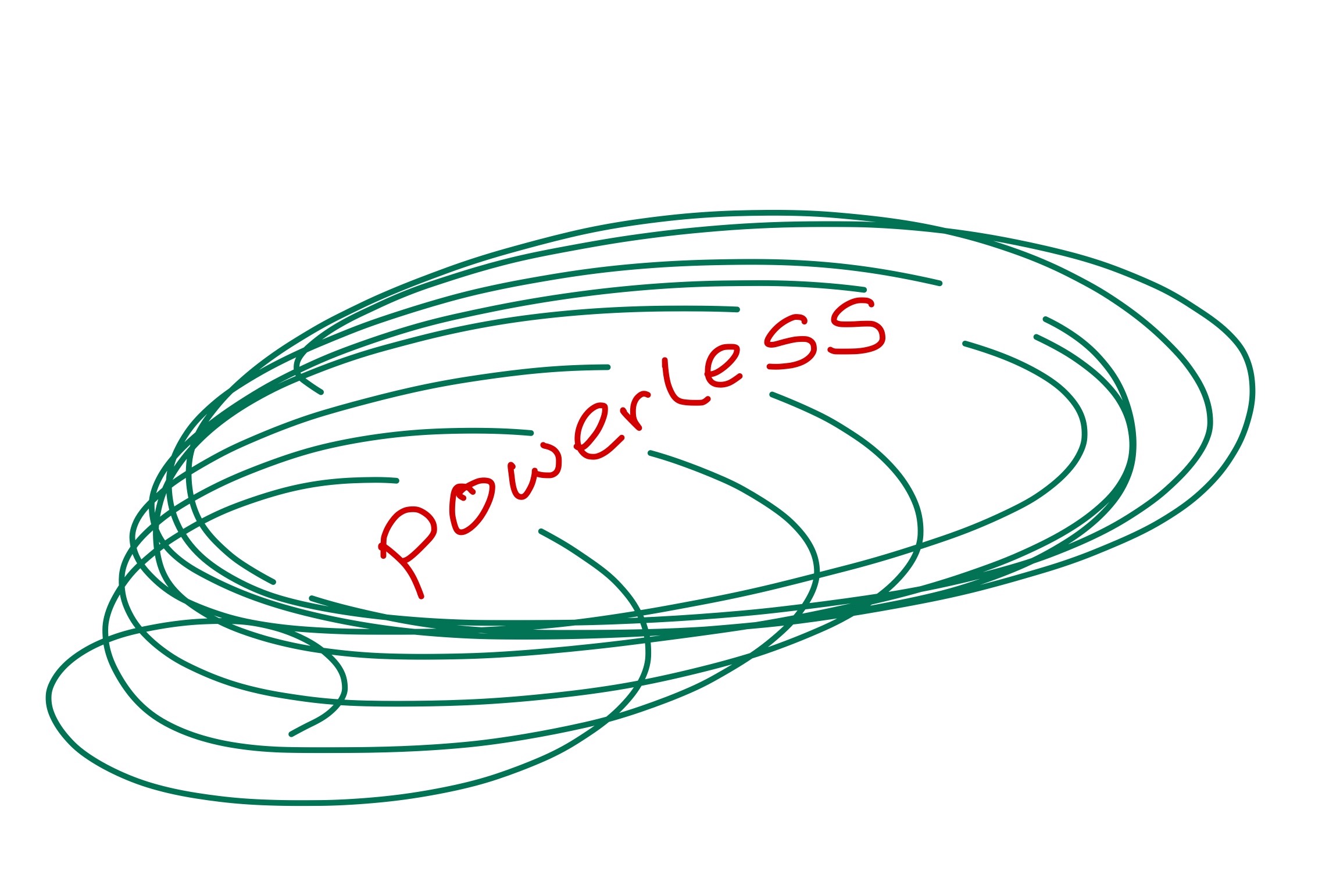
There’s been a fresh despair here in the UK, in me, this week. Dispatches from Brexit talks have had a ‘your worst fears are true’ quality to them. We are heading for a no-deal exit; it seems that we’ve been heading there all along. As hopes of any kind of stabilizing deal evaporated, I’ve noticed myself agitated like never before. Waking in the early morning – flipping around on social media – turning the news off – only to turn it back on moments later. Hands over my ears one minute. Girding myself to face it the next. An incredulous dervish. Here’s a sketch:
Ungraspable Tyrrany
It was on Thursday, when news of Johnson’s failed Brussels trip came accompanied by rumours that he’d not only failed in his mission, but that he’d embarrassed the nation as well with bluster, quips and overall lack of statecraft, that the bell finally tolled. It’s going to happen, I thought. I guess there’s always a moment when hope pivots. This was mine. As the grim inevitability of ‘no-deal’ took over I felt a strange kind of relief. No more clenched vigilance. The capitulation ushered in a new powerlessness that was at least more relaxed. We are inside something big – I told myself – some ungraspable tyranny.
Warlords of capitalism
Zooming out brings understanding but little comfort. On doubledown news, George Monbiot tells us from a comfie armchair that Brexit is the result of a civil war within capitalism. There are oligarch warlords are on one side, he says, who want unfettered freedom to grow their wealth and who eschew taxation, regulation, and in their unguarded moments, even democracy itself. House-trained capitalists on the other side, are those corporations and rich people who value stability, regulation, government and the rule of law. Seen this way Brussels this week was a battle-front in this civil war. Between the warlords Brexiteers and the soft capitalists of Europe. A no-deal Brexit under these terms is a victory for one side, even if it doesn’t look that way. It’s a viable argument, just not exactly comforting.
Sovereign individuals
Because if so, where will this battle end? Over the summer when driving the roads of West Cork in my native Ireland my husband and I listened to the audiobook: “Notes from an Apocalypse” by Mark O’ Connell. It’s a strangely uplifting book, despite its gloomy title. In it, O’ Connell tells us about the idea of the “Sovereign Individual” – a super-rich, all-powerful Silicon Valley type who lives beyond the confines of state and even planet. Think Elon Musk and his expeditions to Mars and Peter Thiel, CEO of PayPal who has bought a chunk of lake and land in New Zealand to build a luxury bunker for himself. The Brexit ideology seems to fit hand-in-glove with this notion of an amoral ‘ubermensch’ (1) made flesh. More eerily still, the emergence of the Sovereign Individual was predicted by none other than William Rees Mogg in the late 90s in his book of the same title (2). Rees-mogg was father of Jacob – Brexiteer, Victorian dandy – and my local MP.
Weaponised words
There has been much use of words in this blighted battle. Words that shape-shift in meaning – that signify half-felt, underarticulated yearning and feeling. “Sovereignty” has recently come to the fore (4). I suppose it might be used as a way to connect up visceral feelings of national pride to the deployment of naval vessels to protect fishing stocks in the weeks to come. I fear what is to come. I’m not the only one. “I fear for my country”, says longstanding Tory Chris Patton and former Bath MP in today’s UK Independent. He says that Boris Johnson is an English Nationalist on a runaway train of English exceptionalism. How I wish Lord Patton was still my MP!
Acceptance
On social media in the UK – whether we call it an echo chamber or not – there is a buzz of despair. One tweeter, with the handle @UKdemocrat asks for any clues on how to temper his feelings of “such abhorrence and hatred as I feel for Boris Johnson because of what he is doing to our nation and its people”. “I do not like feeling like this”, he says. “I’ve accepted this fate”, says a friend on Twitter, “as much for my own mental health as much as anything”. Acceptance is essential for adjustment. But what do we do then?
Poetic activism in a petrified moment?
What good is the idea of ‘poetic activism’ in the face of such fear and powerlessness? I recognize that words do matter. So what words can I write that resist the prevailing narratives of battle, skirmish and sovereignty? I’ll admit that, at times, my earlier writings about shaping my anger or committing acts of disobedience don’t quite feel up to this petrified moment.
Between angry rebuttal and passive acquiescence
When I reached Warleigh Manor I leaned against the stone pillar and let it cool my cheek for a moment before turning for home. As I did, I recalled a quote that a reader of this blog had generously shared with me earlier in the week. She wrote that she had learnt, in her life, to harness her anger through her writing. It had helped her, she said, to find a way of
“living in that space between angry rebuttal and passive acquiescence”
Ken Gergen (3)
Virginia Woolf once said something similar:
“I’m terrified of passive acquiescence, I live in intensity”.
I do not acquiesce
I’ve stopped fixating on the outcome of the negotiations. That “space between angry rebuttal and passive acquiescence” is the place to head for. It’s an intense place. I accept that, one way or another, on 1st January 2021 the UK will leave the EU in an ignomious, dreadful way that will impact many lives, livelihoods in this country and in Europe. I accept this. But I do not acquiesce. My activism is a verb not a position. I was nearly home by now, running in a steady rhythm down the hill to my house. Stride by stride, breath by breath:
I do not acquiesce.
I do not acquiesce.
I do not acquiesce.
I whisper these words to you from a poetic place. Whisper them too when you need to. For it’s all anyone can do. Let’s live in full intensity for now, accepting where we are, ready to face what’s ahead.
Acknowledgements
Many conversations and friends have helped shape what is in this blog: not least Clare, Amanda, Dan and many others including my fellow explorers from the Poetic Activist Inquiry group that launched this week. Thank you – for the kinship and connection.
Poetic Activist – question to chew over
On Powerlessness – on what frontiers in life do you feel powerless about something that matters to you. Though this blog is about the powerlessness that comes from political forces, other forms of powerlessness may reside closer to home – in your family, in the workplace, in your community, within yourself?
Are there matters or concerns in your life where you manage to occupy the space between angry rebuttal and passive acquiescence? In what way are you different in that space to when you feel powerless?
Notes
(1) The “Sovereign Individual” was written by James Dale Davidson and William Rees Mogg and was published in 1997. Former Labour press secretary, Alastair Campbell described the book on his blog as a key to understanding Jacob Rees Mogg’s love of Brexit.
(2) The idea of the “Ubermensch” was a notion put forward by Nietszche who himself suffered severe physical and mental illness.
(3) Ken Gergen is the American social constructionist who coined the term “Poetic Activist” that has inspired the stream of writing and thinking on these blogs. I give a bit more background here
(4) For a real clarity on the word “Sovereignty” and what it costs – read the following article by journalist Rafael Behr last week where he argues the real deal-making going on is trading Sovereignty for Wealth https://www.theguardian.com/commentisfree/2020/dec/08/exit-brexit-deal-wealth-sovereignty-timescale