
Blog
Poetic activism – be astonished
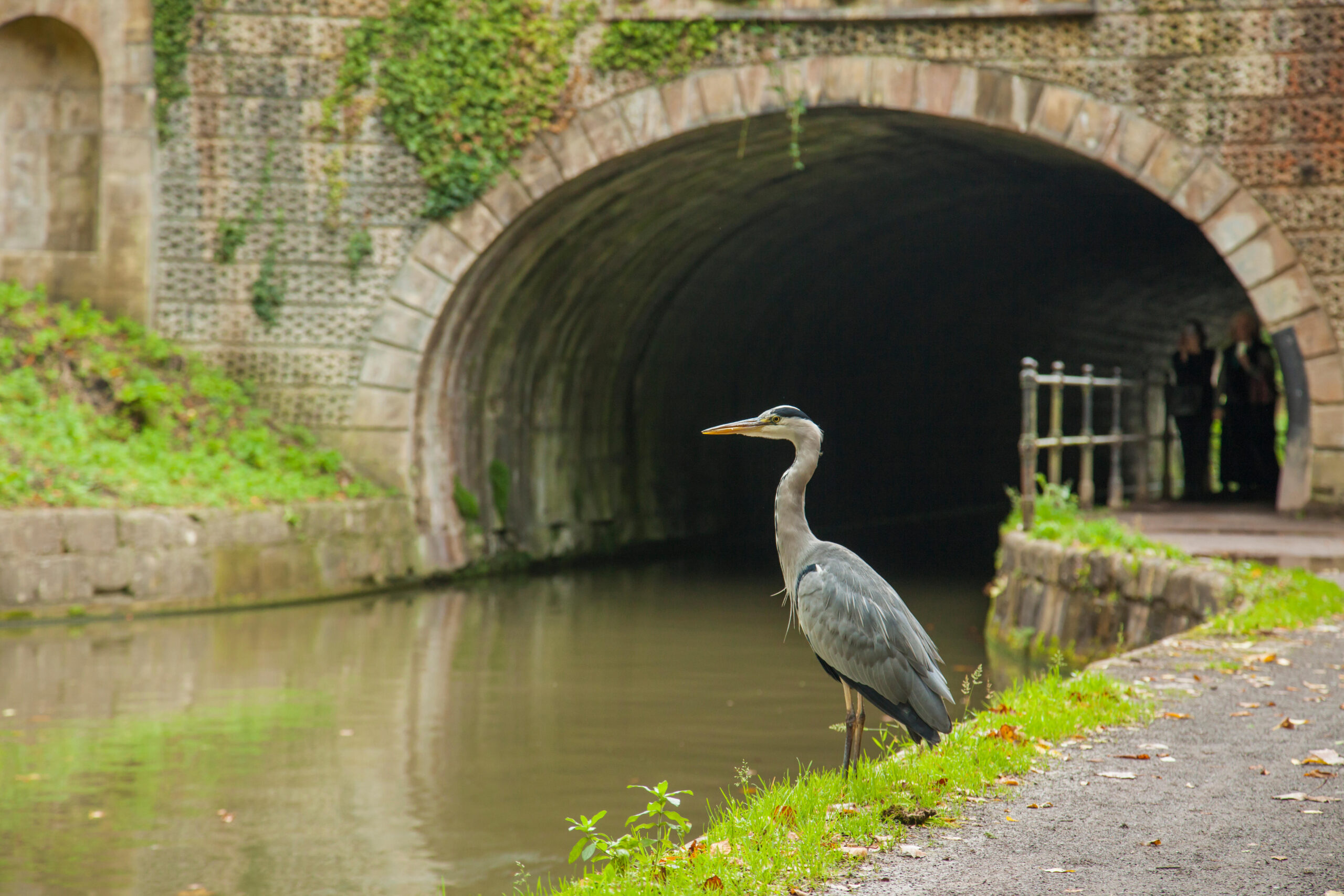
A heron by the canal near where I live (photo: alamy stock image)
Instructions for living a life
Pay attention
Be astonished
Tell about it
Mary Oliver
The harmonics of poetic activism
Mary Oliver’s poem catches well for me the harmonics of poetic activism that hold the poetic and action together in a state of curiosity. Pay attention, she advises. In this way she invites us into a fresh seeing and being in the world. The attention she calls for is expansive – it is the kind of attention that might lead to astonishment. When have you been astonished – when has your breath been taken from you or your heart opened wide? (Note: I’m not referring here to the more hard-bitten kind of astonishment I feel – like when watching Donald Trump come home from hospital this week!). On the other hand, I have been astonished by herons recently – who have been popping up – with uncanny timing – in all kinds of places – in my writing, in real-life on canal walks and in people’s stories.
Instructions for living a life
With her instructions, Mary Oliver calls on us to be in the world in a poetic, an artistic and embodied way. To be fully present in our being and noticing in the world, so that the door is opened for us to become surprised. “Tell about it”, she instructs. Perhaps she says it gently. But I like to think of her being a bit bossy – exhorting us to fly the flag. “Stand up for this way of being”, I imagine her saying, in the manner of a grandmother admonishing her child to straighten their back. Be bold! Give this a longer meaning. Thus I see Oliver’s poem as itself a poetic-activist move that encapsulates her poetic mode with a call to action.
Everything is going to be alright
Last week was National Poetry day here in the UK. Maybe that’s why I’ve noticed so many people posting poems online – sharing them in small groups – and sharing them direct to me. The Mary Oliver poem came via J. on a sustainability network I’m involved in.“In the upheavals of the present…”, he started. “I decided to share this”. Several people wrote to thank him. Then, after a phonecall last Friday, my friend and colleague P. sent me the a poem by the Irish poet Derek Mahon’s titled “Everything is Going to Be All Right”. She wasn’t into poetry she admitted, but Mahon had died that very morning while we were talking; the synchronicity, given the themes of our call meant that it seemed so fitting (we’d talked about Covid, family illness, climate and hope).
There will be dying, there will be dying
But there is no need to go into that
The lines flow from the hand unbidden
And the hidden source is the watchful heart(…)
I lie here in a riot of sunlight
Watching the day break and the clouds flying
Everything is going to be all right
Derek Mahon
The final line of Mahon’s poem, “Everything is going to be all right”, is so soothing as a line in itself, and the gesture of P. taking time to dig out the verse and share it was a further soothing stroke.
Helplessness and restoration
On a long canal walk last week, another friend told me how, when she’d felt utterly helpless as to how to help her young daughter who was anxious and fearful about returning to University, she placed Wendell Berry’s “The Peace of Wild Things”, on her pillow.
When despair for the world grows in me
and I wake in the night at the least sound
in fear of what my life and my children’s lives may be,
I go and lie down where the wood drake
rests in his beauty on the water, and the great heron feeds.
Wendell Berry
Touched by my friend’s story I re-read the poem. The first couple of lines caught me off guard. They seemed to refer directly to the powerlessness that I, and I guess, many parents are feeling at the moment. It’s been a worrying nail-biting week – with my two children now back at University – one already self-isolating in halls and the other living in a Covid-19 hotspot in Manchester. As I read on, I was astonished to encounter the heron again, nestled with the wood drake inside the verse, bringing restoration.
Life-enhancing poetic acts
The words of the poems provide comfort in and of themselves. But it is the act of sharing them I want to suggest is what elevates them into a connective type of action – an activism even – that creates the kind of fellow-feeling and kinship we need right now. I’m sure that daughter will have felt her mother’s care when she saw the Wendell Berry poem on her pillow. So it is that the poems above are not only beautiful words – they are beautiful words nested within life-enhancing poetic acts.
Living inside ambiguity and turbulence
All this amounts to what I want to say: the poetic seems so important right now – helping us feel and be with the ambiguity and dynamic feeling of a turbulent world circumscribed by an uncertainty that can feel menacing at times. Above I have focussed on poetry itself, but the ‘poetic activist’ is categorically not confined by words. The poetic activist does not even need to like poems! Reading, sharing and writing poems may not be their thing.
Towards the elegant
Poetic activism is both an invitation and an inquiry. It invites us to value and seek out the poetic in our lives. For some this may indeed be poems, but for others it might be spending time dressmaking, photography or pursuing whatever artistic projects help us “pay attention and be astonished”. That might be tilting your head back and looking at the way the wind catches the leaves of a tree or how the clouds move across the sky. Or it may involve zoning out of a conversation to see the way a person’s body is moving instead. It is in this wider sense then that the “Poetic” is meant – as a means to attend to expressing and seeing the artistic – and the elegant – in our lives.
Is it enough?
But is this enough? I ask and I hear others ask too. No, honestly. I don’t believe it is. Not unless we can understand, connect and strengthen the action that results from this place. This is where the inquiry comes in. This “poetic activism” project has, from the start, sought to create spaces and conversations where people with a diverse range of practices and concerns can come together and find ways to “tell about it” – to “tell” who they are in the world, and through that telling, comes a connecting and a strengthening we’ve not had before.
Exploring the poetic move
So the inquiry relates to ‘action’. What is the nature of ‘action’ that could be seeded by the poetic spirit? Over time, I’ve come to inquire with others into “the poetic move” – the action that arises out of a place that is bathed in the poetic. What could that be or look like? Over time, we’ve been coming to understand action more widely as something that can be a thought or the act of doing nothing (for now), of waiting, of listening. Not forever. But a bit like the heron I see on my canal walks, waiting until the time is right.
Micro-discipline
Day 1: Dwell on ‘being astonished’
Open up the question of astonishment in your life; prime yourself for it.
When have you been astonished in your life (in a heart-opening way)? What is your experience of it?
Journal (sketch, list, reflect) for a few mins where this dwelling takes you.
Day 2, 3 and 4: Pay attention, Pay attention, Pay attention
On these days see if you can catch yourself in moments of poetic attention. Live your life, while paying attention to your way of paying attention.
Journal (reflect) for a few mins each evening. Has anything astonished you? What moments come to mind?
Day 5: Tell about it
Tell someone about your experience of being astonished. Could be to a friend or partner or you might tweet to the whole world!
Journal (reflect) for a few mins that evening. What has been your experience of the astonishment, and the telling of it?
Notes
(1) Thanks to J. from the responsibility and business practice alumni network (graduates of the Bath and Ashridge MSc) who posted the Mary Oliver poem that inspired this blog and to those many others who shared poems and readings this week.
(2) Thanks to fellow poetic activist inquirers who join in a conversation every couple of months – and whose thoughts and stories run through lots of what is written here
(3) Dr J Kabalt, recent graduate from the Ashridge/Hult Doctorate in Organizational change wrote her doctorate on “Wonder” and went on daily walks doing just what Mary Oliver suggests. I’m not sure if her work is in the public domain yet, but it is well worth reading when it does.