
Blog
Elegy for Guillemots
Irish overseas
In the 80s I was one of the many Irish students who flocked to the Greek island of Ios in the Cyclades to dance the night away and doze on the beach in the daytime turning our pale Celtic skin towards the impossibly warm sun. Each night, the excitement in the open-air club would rise and rise until, towards dawn, the U2 drumbeat would ring out, summoning all sunburnt dancers to the floor for a song that had become an anthem of the night. Surfing the tide of feeling we’d wheel onto the floor and make ready to belt out that first line:
I can’t believe the news today
Oh, I can’t close my eyes and make it go away
And we’d stamp and beat our imaginary drums, singing with gusto: enraged and euphoric all at once.
How lo-ong, how long must we sing this song
Youthful outrage
I was not a political person then and I doubt many of us on that dancefloor were. My concerns were for my love-life and coming to terms with the fact that I had suddenly become an adult when I wasn’t finished being a child. Yet the song drew out a pent-up rage. We were young, we were powerless, and we were angry about we knew not what. We may not have been fully appraised of the deeply political roots of this U2 song and its reference to Bloody Sunday – a terrible episode at the height of the troubles in Northern Ireland – but the song connected us to a feeling of unity and youthful outrage all at once – a strange mix of directionless justice-seeking and hedonism.
Guillemots
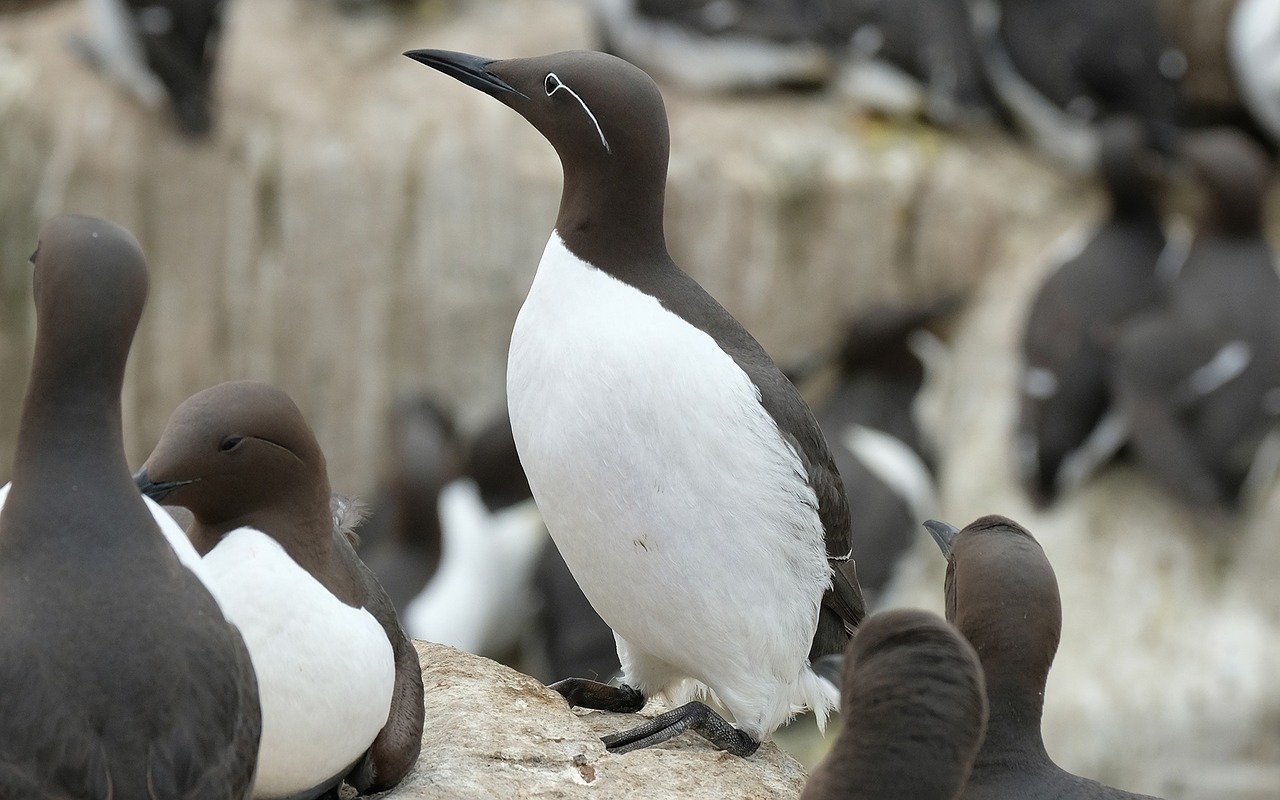
In post-Brexit, pandemic Britain I find the opening lines of that U2 track still spring to my lips from time to time and in a more focussed way. Regular readers will know I often get caught by something I hear. The other morning it happened again. There was a news item on about how guillemots are dying in unprecedented numbers of the South West coast of Britain (see the news story here). “They are flying inland”, the presenter told us, “much further up the estuaries than is normal – and they appeared to be starving”. Her tone was light, vanilla-sounding, neither ponderous nor amused. Just another news item that was interesting because it presented something of a puzzle. Why?
The scientist guest who’d been invited on speculated: “it could be they are hungry, but we see them feeding out at sea, mmm, so it seems more likely that it’s related to toxicity in their systems. So, their flight up the estuaries might be because they are disoriented. There are huge algal blooms off the coast of Scotland that they could be feeding on”. He spoke and, as I listened, I felt a mixture of things. I enjoyed how dispassionate he was in his explanation – it was refreshing. It could be this, it could be that. But I also felt sad – wanting this not to be true – wincing at the thoughts of these disoriented birds flying up the estuaries. I closed my eyes:
I can’t believe the news today,
Oh, I can’t close my eyes and make it go away
Making the connection
The news trotted on and my toast popped. We were onto the Chelsea Flower show that is happening this week in the UK – at last – delayed from the spring. A cheerful excited guest from the Royal Horticultural Society was talking about sustainability and ecology and how great it was that so many had taken up gardening during the pandemic. “But what about the guillemots?” I thought. Its seems it was up to us to make and hold that connection.
I’ve written before about these sudden moments of realization, that unveil a deep-down knowing that we are living in a time of environmental breakdown. But what I haven’t thought into is what to do with such moments when they arise. I can’t make that Guillemot story go away – so what to do instead? Bono does not seem to have the answers.
Hear the earth crying
Instead, I turned to Joanna Macy – a Buddhist scholar, activist and much loved elder of the environmental movement. In a recently released video that is well worth watching for yourselves (3), she tells us:
what we most need to do is to hear within ourselves the sounds of the earth crying
So really hearing these news items within ourselves matters. And though she doesn’t spell it out, she does give us clues as to how to compose ourselves in that hearing. Joanna’s very persona on the video, with her shining eyes and strong quavering voice, and her words exhort us away from sinking or wallowing in a vale of tears. So, taking to the sofa and having a cry isn’t really an option.
Grief is a doorway
Grief, Joanna says, is simply a doorway. Our moments of caring lead through to a sense of interconnection with all beings. This she says, is a kind of awakening.
I’ve come to think the first step to awakening is simply being glad you are alive
Just to stop for a minute – that in itself is a politically subversive act.
Small sentence – big ask. Be glad to be alive. Hear the sound of the earth crying in such a way as it opens things up rather than closing us into a state of despair that still keeps ourselves distant – actors in our own human drama. Anthropocentric sadness I suppose.
A politically subversive moment
It’s a delicate matter, I think. Finding poetic beauty inside grievous loss. Finding the crack of being that can hold it all and not slide into egoic dramatization, mawkishness or anger-filled railing. Yet, for a moment, I feel that I glimpse it. I am suffused with wonder and sadness all at once. I want to go to the sea and look at the guillemots and cherish them with a loving gaze. The moment passes, of course, fleeting but real. A political, subversive moment? Perhaps.
Turning to the poetic
Is it possible that turning to the poetic can hold these complex moments? I think so. It seems fitting then that Joanna moved to poetry towards the end of her talk. In an earlier part of her life, she spent time translating the poems of Rilke and it’s a thrill to hear her speak out his verse in the original German language before turning to English to recite her translation of his poem, “Let this darkness be a bell tower”.
I will finish now with that poem trusting it to bring further nuance and meaning to what I’ve written. The poem I think mostly speaks for itself and in a way it reaches directly out to us with its first line. Listening to the poem created the breathing space for me around that awful Guillemot news story, pointing to a doorway “In this uncontainable night”. I hope it might offer something to you as you read and make sense of whatever you are concerned with today. Enjoy.
Quiet friend
Quiet friend who has come so far,
feel how your breathing makes more space around you
Let this darkness be a bell tower
and you the bell. As you ring,
what batters you becomes your strength.
Move back and forth into the change.
What is it like, such intensity of pain?
If the drink is bitter, turn yourself to wine.
In this uncontainable night,
be the mystery at the crossroads of your senses,
the meaning discovered there.
And if the world has ceased to hear you,
say to the silent earth: I flow.
To the rushing water, speak: I am.
“Let This Darkness Be a Bell Tower” by Rainer Maria Rilke
from Sonnets to Orpheus II, 29. Translation by Joanna Macy and Anita Barrows
Source: On Being “A Wild Love for the World”
I dedicate this blog to the guillemots of the SW coast of the UK.
Thank you
Thank you for reading! Feel free to share using buttons below or click on the subscribe button here to hear about future postings
Notes and acknowledgments
(1) I highly recommend this thoughtful piece of writing from Joanna Maberly – a reader of this blog. Joanna reflects on her own form of activism in light of the recent events in Afghanistan and links some of her thinking to poetic activism.
(2) The Guillemot story: https://www.nhm.ac.uk/discover/news/2021/september/guillemots-dying-in-unprecedented-numbers-off-UK-coast.html(2)
(3) The video of Joanna Macy is: https://vimeo.com/588455489 Thanks to Peter Reason and Paul King for independently drawing my attention to it.